Lauren Spencer King
In Pursuit
February 14 - March 28
In Pursuit
February 14 - March 28

Beauty, intimacy, and wonder have long been staples of Lauren Spencer King’s practice. If you have ever found yourself standing in front of one of her small but mighty paintings you likely experienced a sequence like the following: stunned by the punch of beauty, brought closer by the scale and density of detail, and curious as to how something as traditionally modest as a “watercolor on paper” came to cause such sublimating intensity through subject, composition, and method. Ultimately, a slow building feeling of intimacy is recognized when viewing these paintings, extending from the artist’s own deep intimacy generated by producing them. What has evolved in the making of the six paintings at the core of this exhibition is precisely how King has engaged those foundational elements in a more complicated manner. Primarily, this is achieved through the three paintings that all share the title Fabric, which in turn have influenced her approach to the continuing series of paintings sharing the title Flower. Even the fact that these paintings are exhibited in tandem — a coming together of independent forces — is a factor in guiding us through an expansion of beauty, intimacy, and wonder, into desire, tension, and romance. A seemingly subtle shift when simply typing out or reading those combinations of words, but when this is really about an experience of looking, they bring a whole set of accompanying complexities along with them.
As with most of King’s work, the Fabric paintings are attempts to replicate an experience of sustained looking that she first captures through photography. This has always been the case with the Flower paintings. Flowers are sourced locally with an eye toward painting them, then arranged and rearranged in response to the natural lighting conditions of her studio in Los Angeles until she settles on the right representative composition that she then photographs before bringing it out through painting. The lone exception is the latest edition, Flower no.28. The flower in this painting was photographed in situ in the rose garden at the Huntington Library, Art Museum, and Botanical Gardens in San Marino, California. Being in the presence of the many roses in this garden is sensorially overwhelming, and her modified approach to this particular flower allowed her method to commingle with another’s, in this case the botanist or designer tasked with organizing these roses and inviting the public to share in their intimacy with the subject. The photograph’s used to make the Fabric paintings are not her photographs of the fabrics themselves, but rather of book pages on which she found the source images of historic garments. It is through these new layers of process, and the intersection of the qualities of the fabric with the qualities of the book page and those of the environment in which they were photographed that we begin feeling the pull toward desire, tension, and romance.
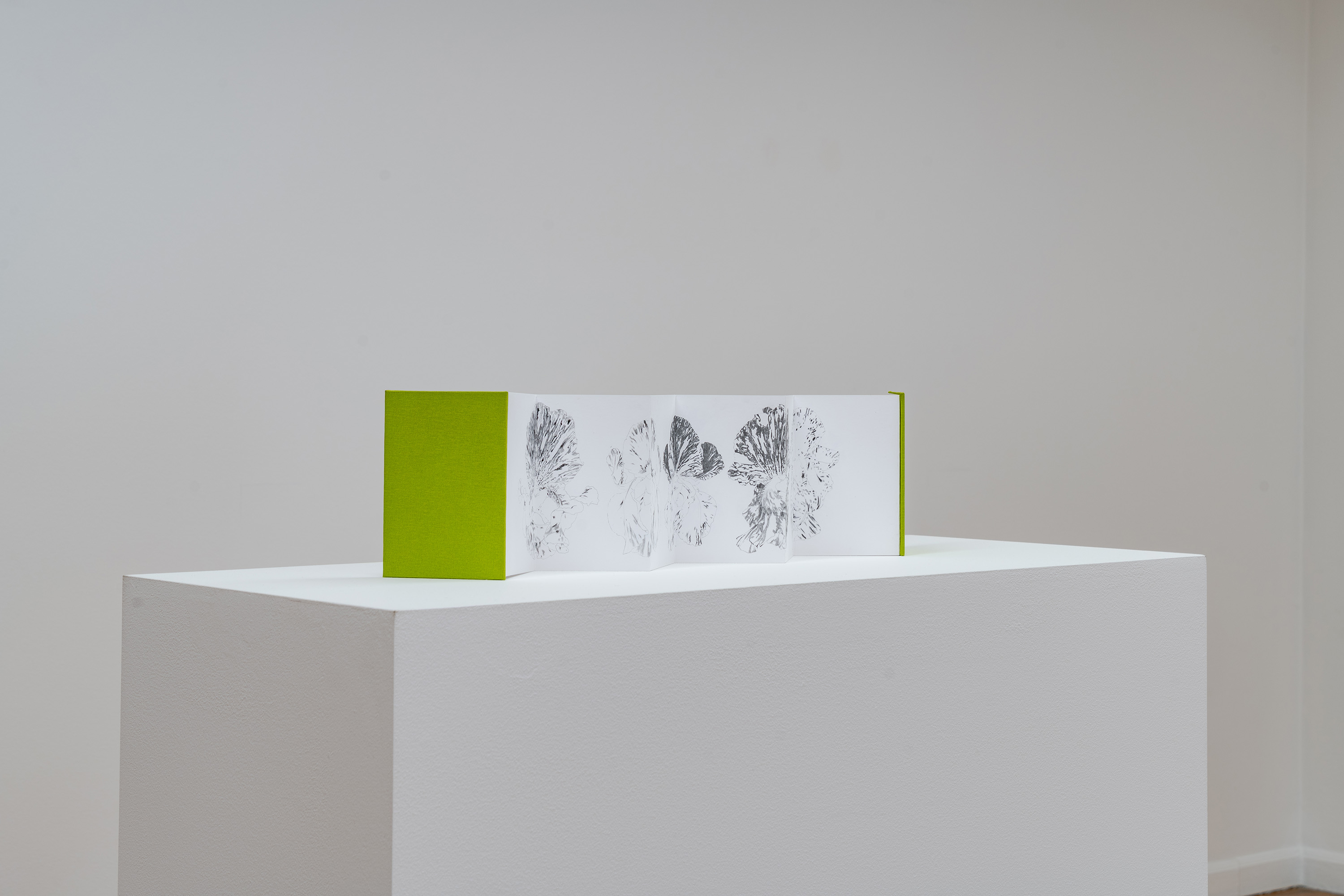
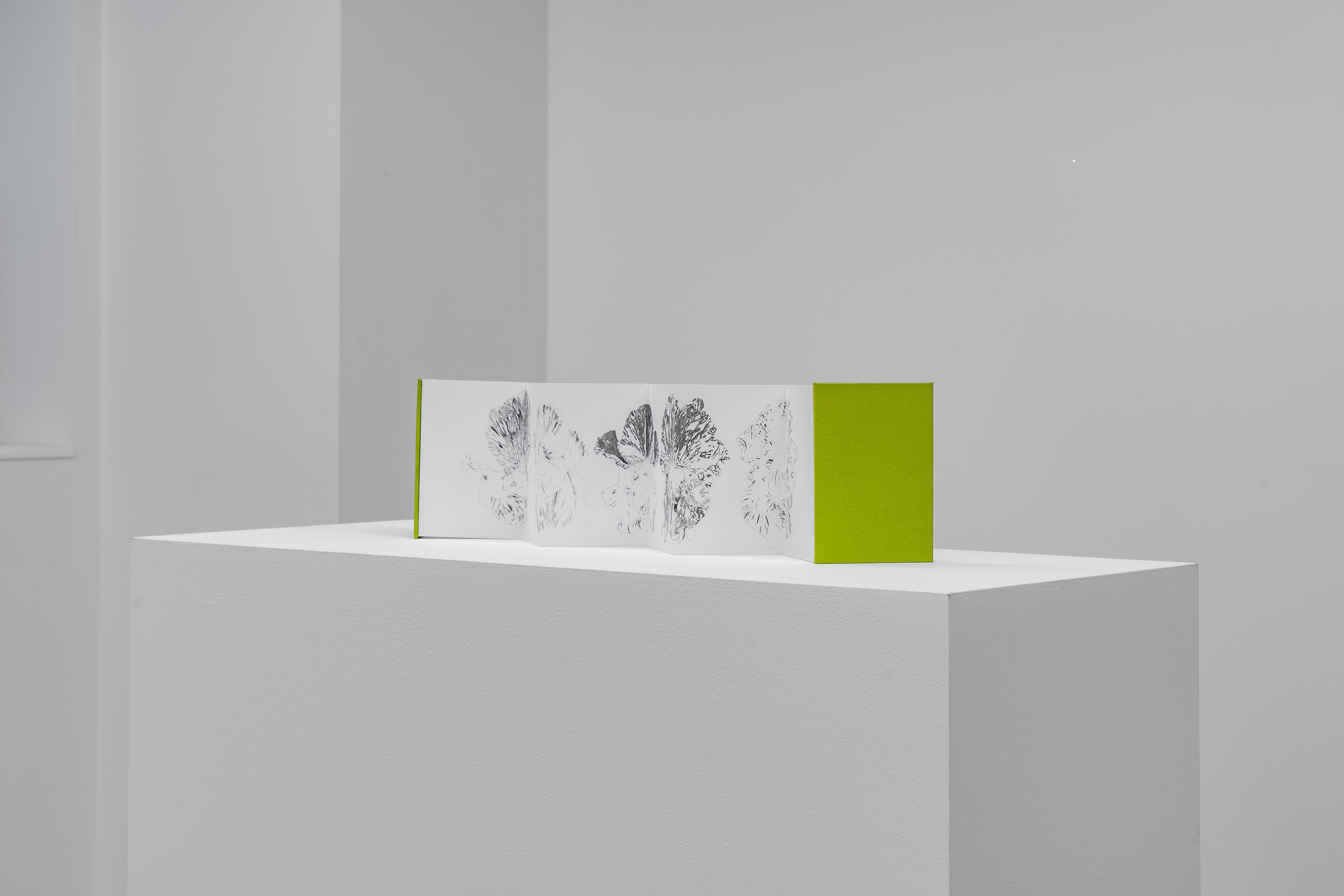
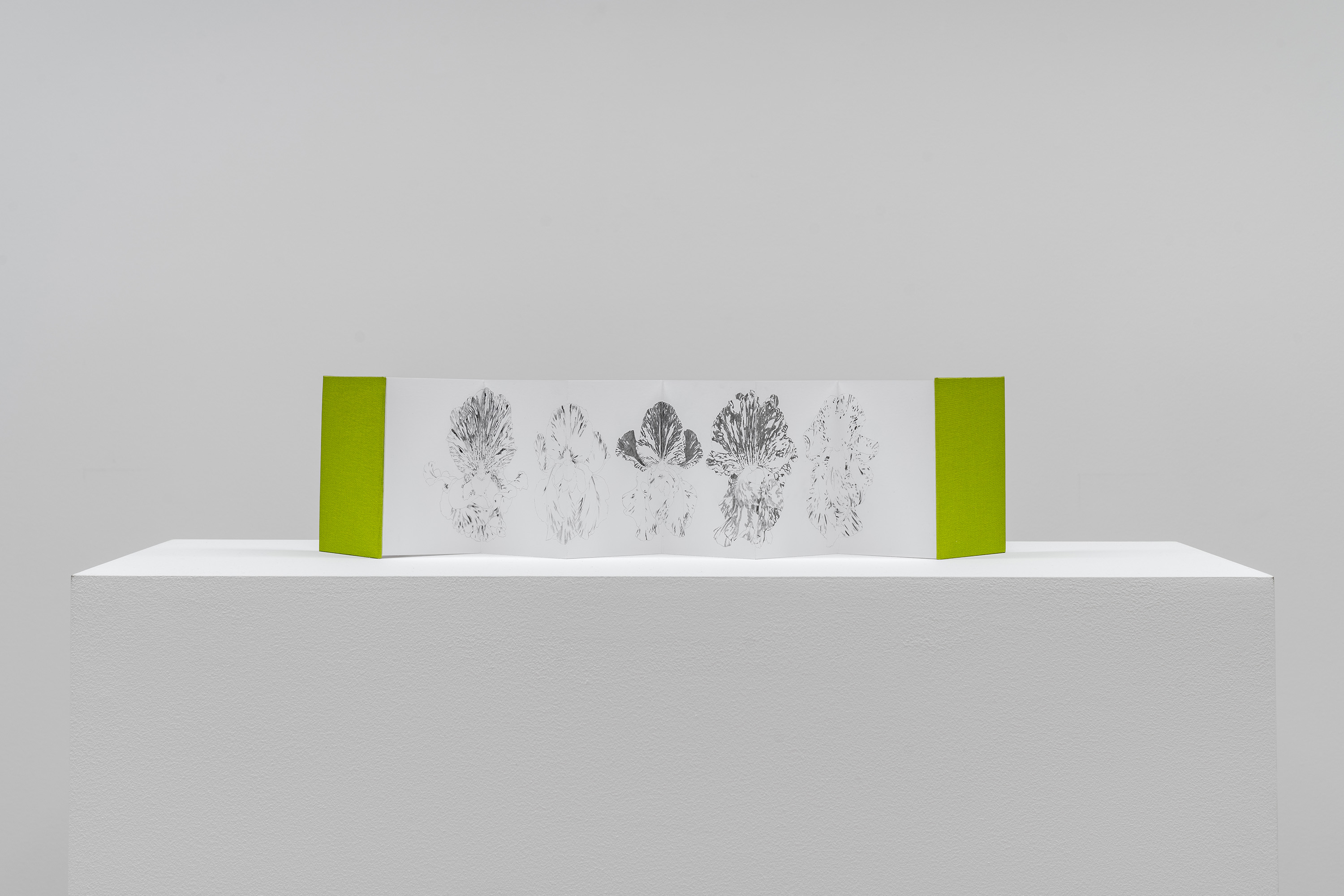
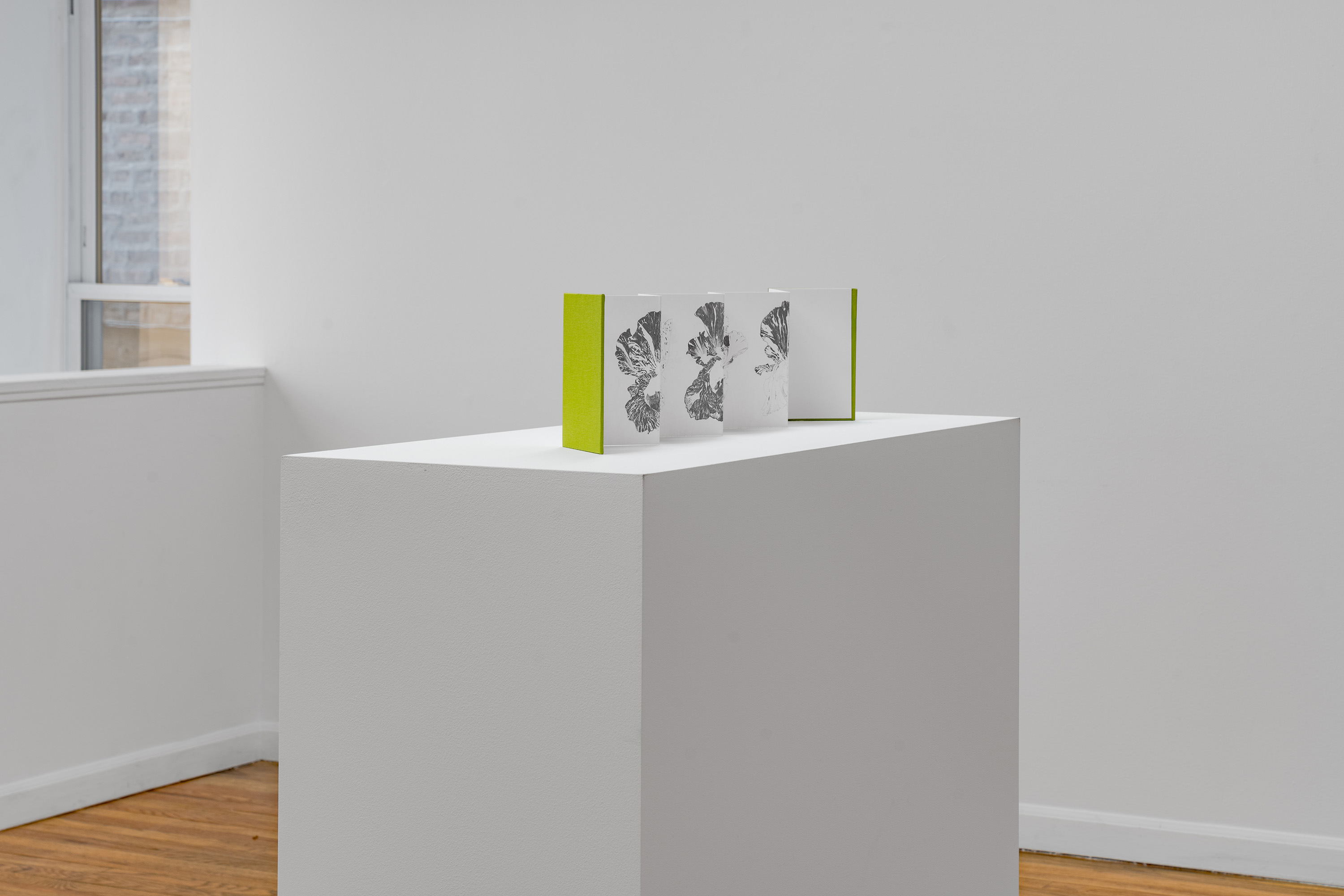
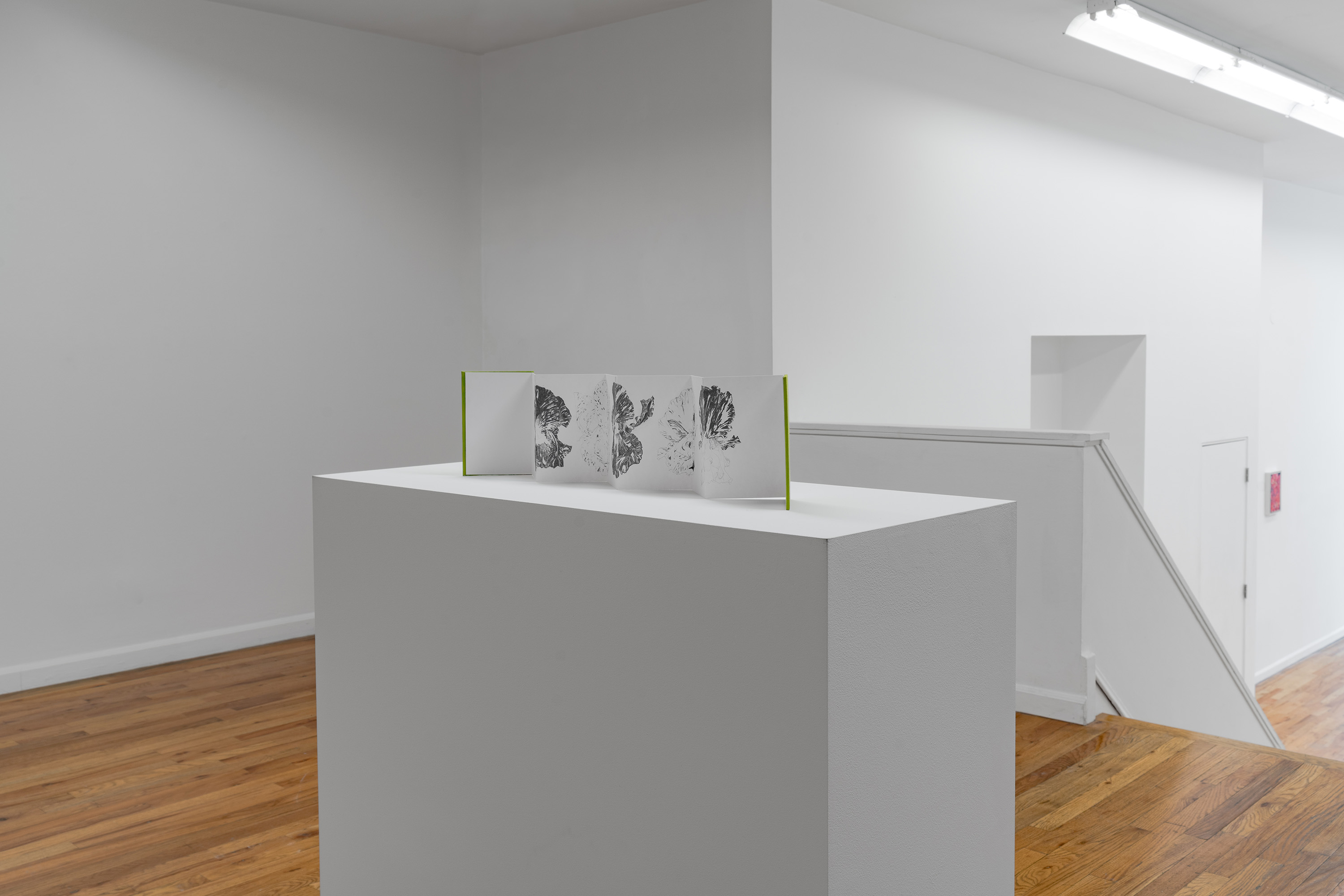
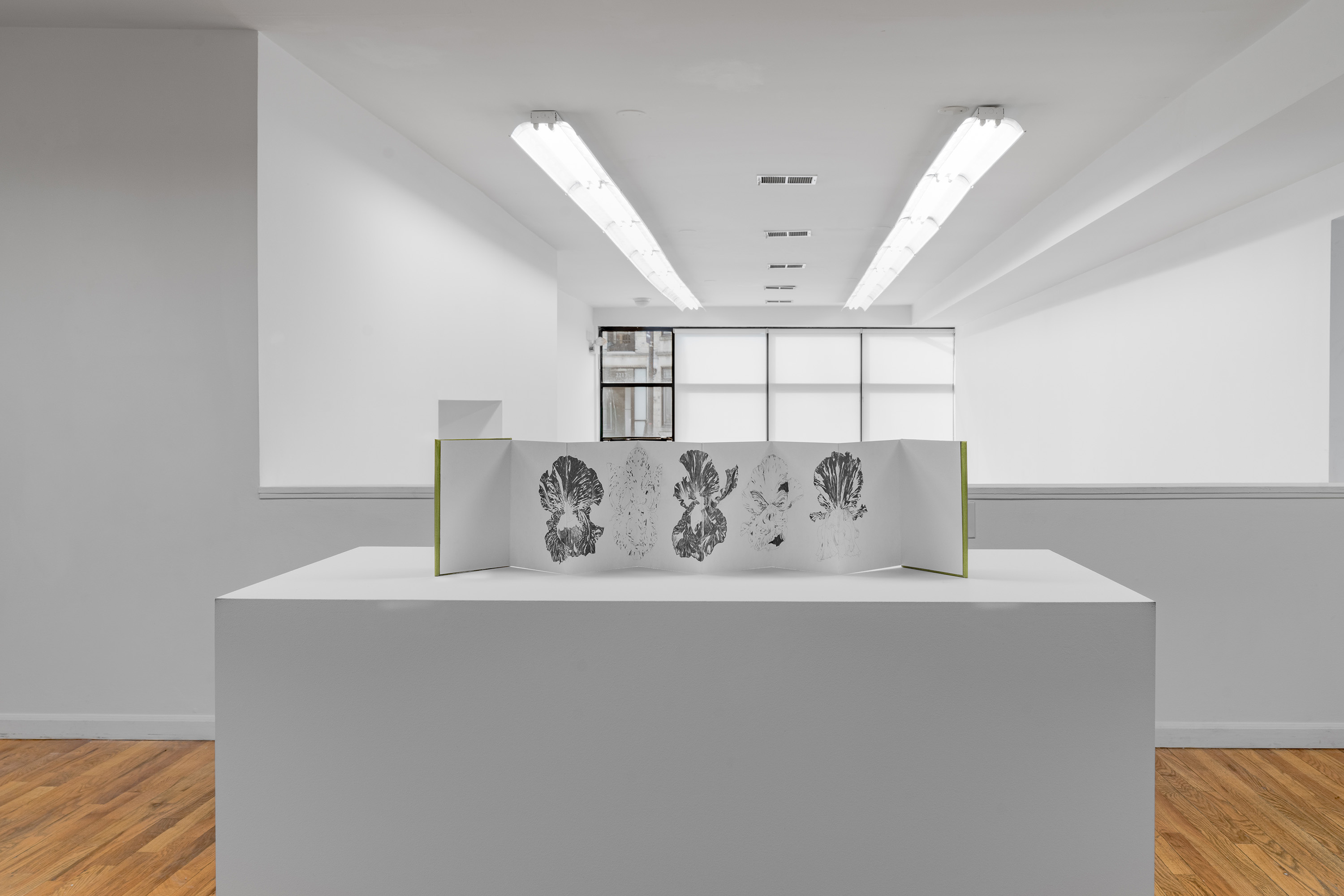
Folds, color, patterns, and texture are crucial parts of the selection criteria for King. Each painting is made one-at-a-time over the course of months, so selection itself is a laborious act of consideration. The fold in particular is the primary driver of tension. Whereas a pattern may serve to quiet formal tensions through repetition, the folds in these garments disrupt and reorient, shifting the tension into a more desirous territory where the predictable becomes mysterious. The impact of this effect is elevated when there are colors that invite your eyes to linger and textures that call your fingers to reach through and touch them. Through additional details of the source pages (each painting shows the pages curving into the book’s spine and reflecting the light from the studio in which it was made), King’s paintings provide access to what is both gained and withheld in her engagement with the pages, allowing the paintings to toggle us between offers and denials of the fabrics themselves. Her exploration of folds aligns directly with her use of flowers in King’s accompanying artist book. When fully opened, the accordion-style book presents a series of ten drawings examining the petal patterns of an iris arranged linearly across two sides of a single sheet of paper. Rather than centering each drawing between the accordion folds, King has centered them directly on the folds, a disruption that is more suggestive of conjoining than separating. The folds in the books, the folds in the fabric: these are sites of romantic tension, where what was apart comes together, and desire and the anticipation of gratification can be felt.
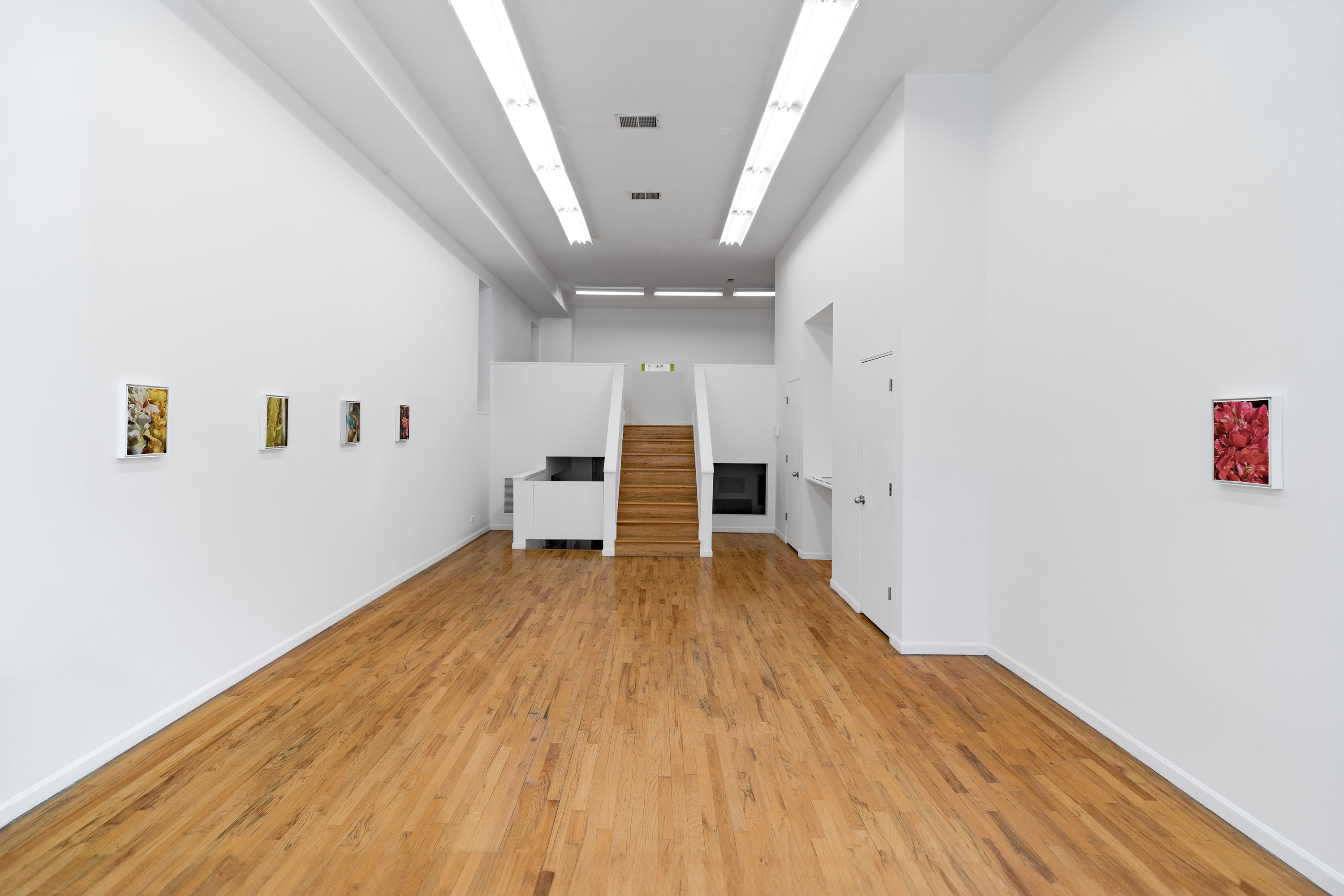
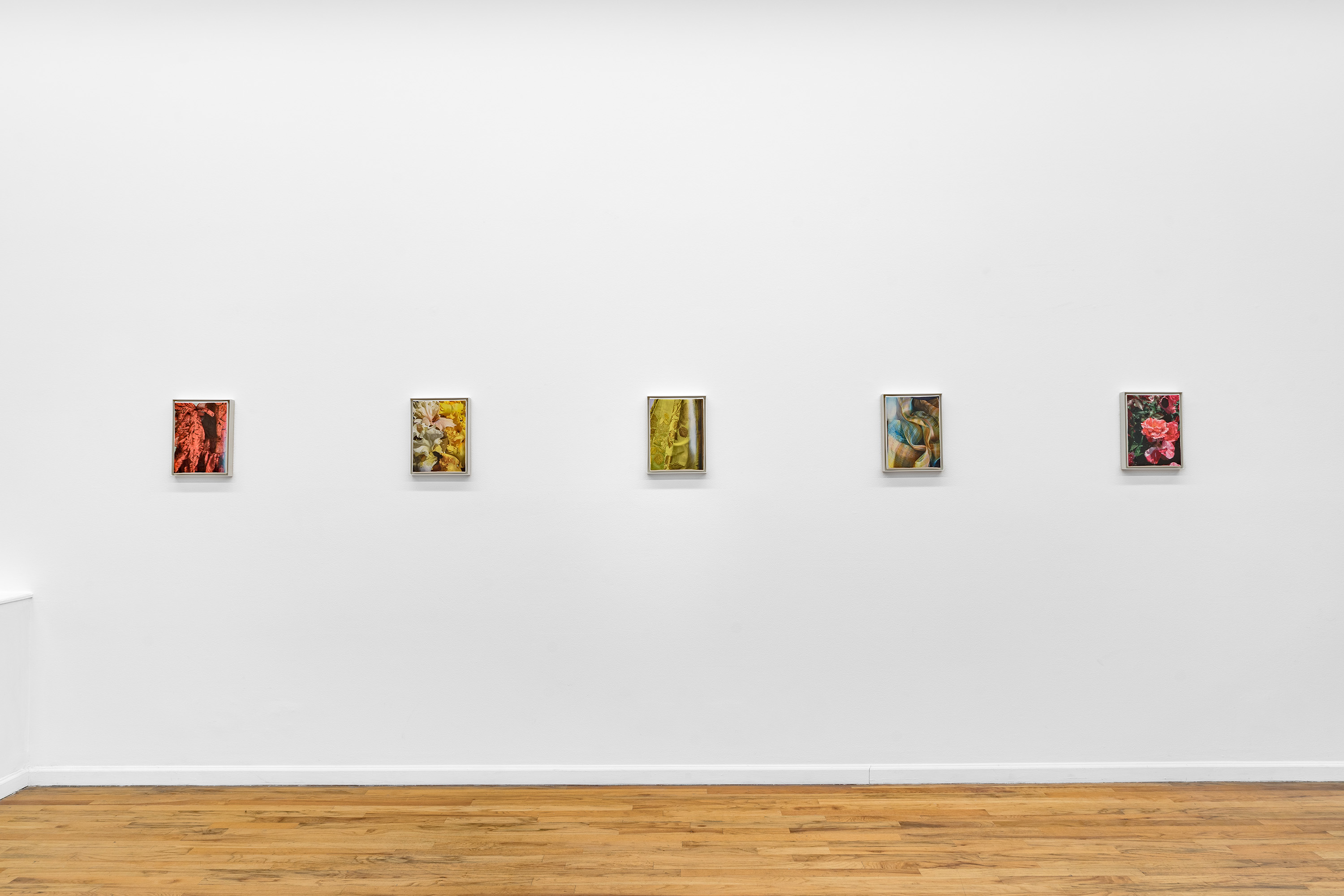
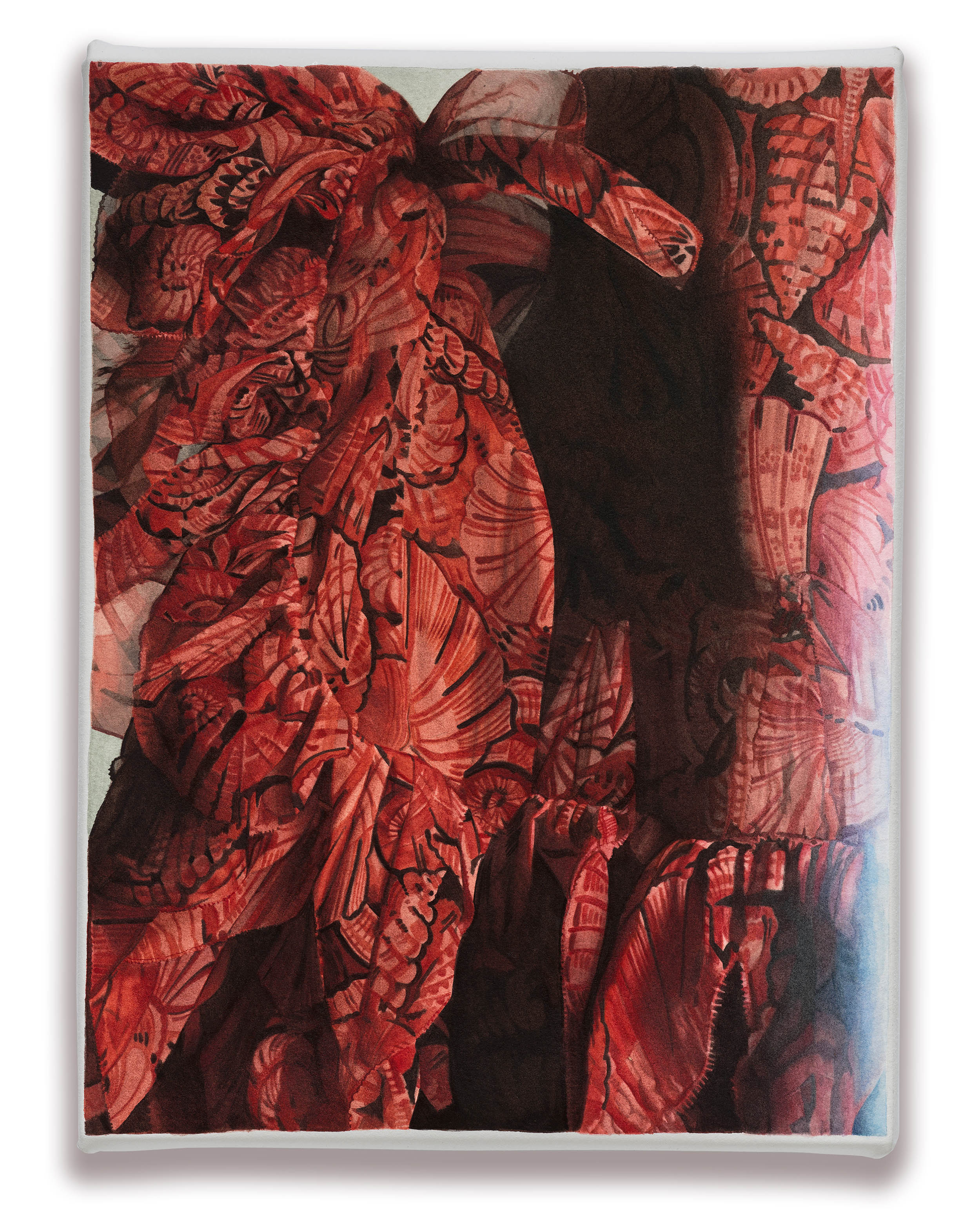
Fabric no.6, 2025, watercolor on paper on panel, 12 x 9 inches
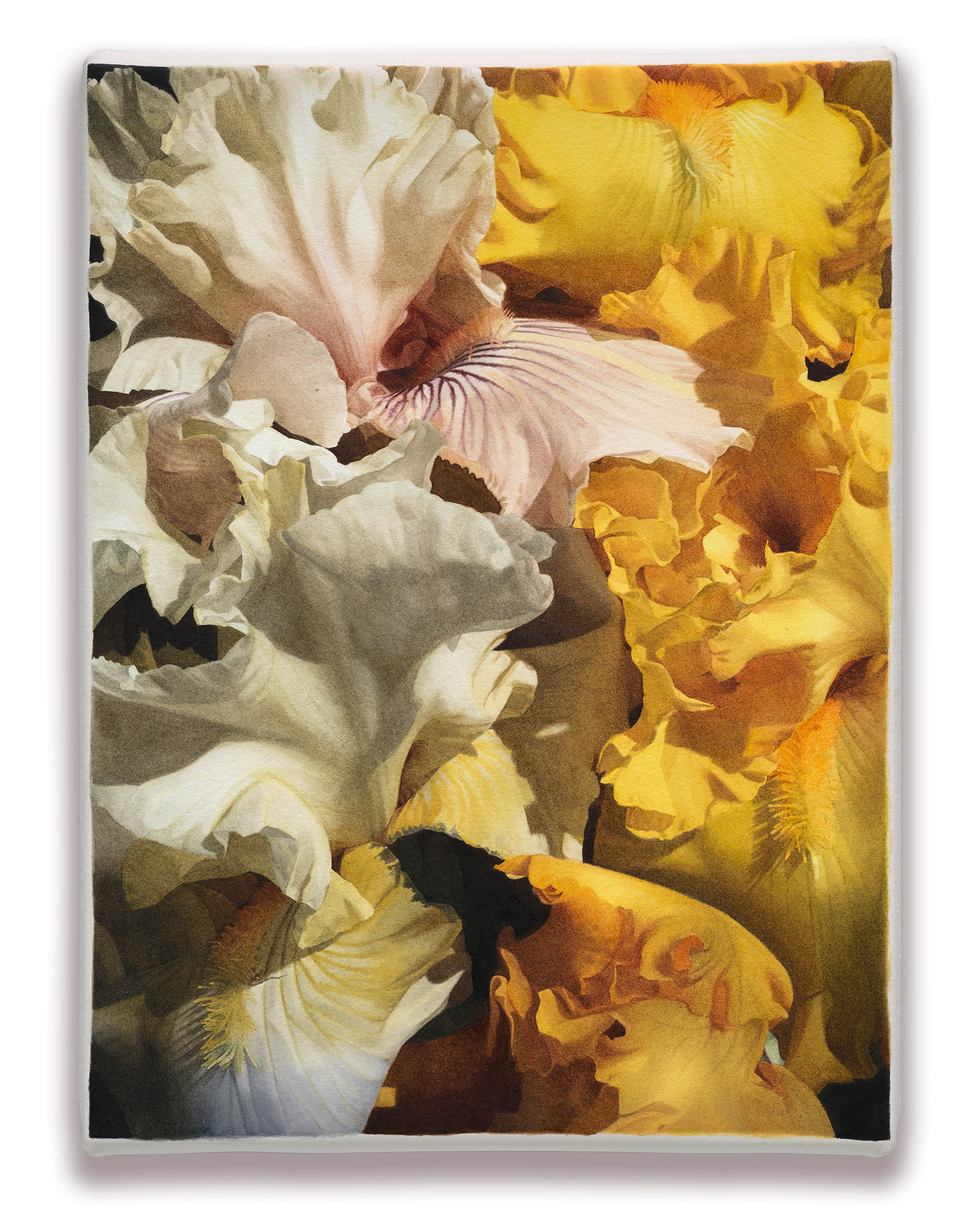
Flower no.26, 2025, watercolor on paper on panel, 12 x 9 inches
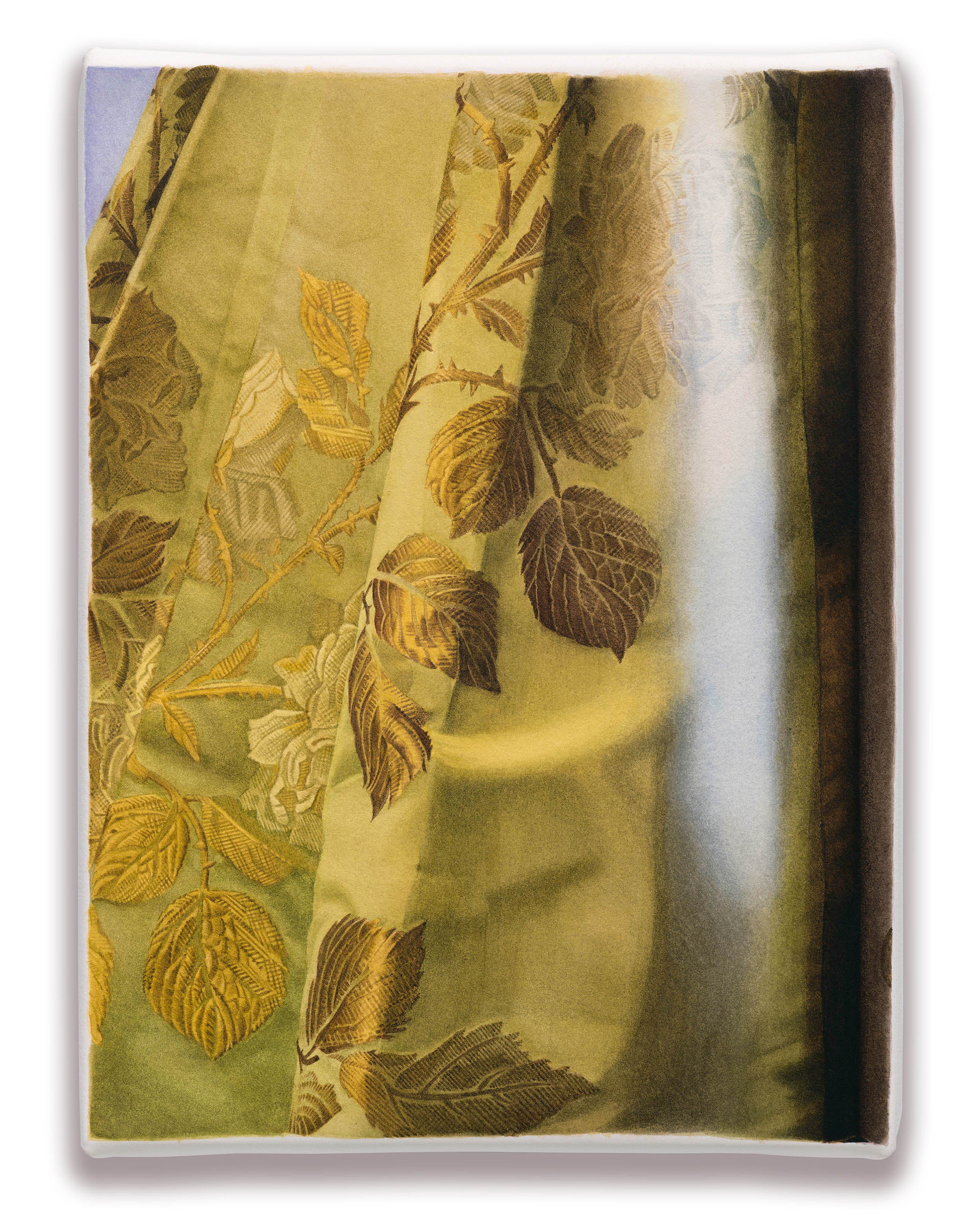
Fabric no.5, 2025, watercolor on paper on panel, 12 x 9 inches
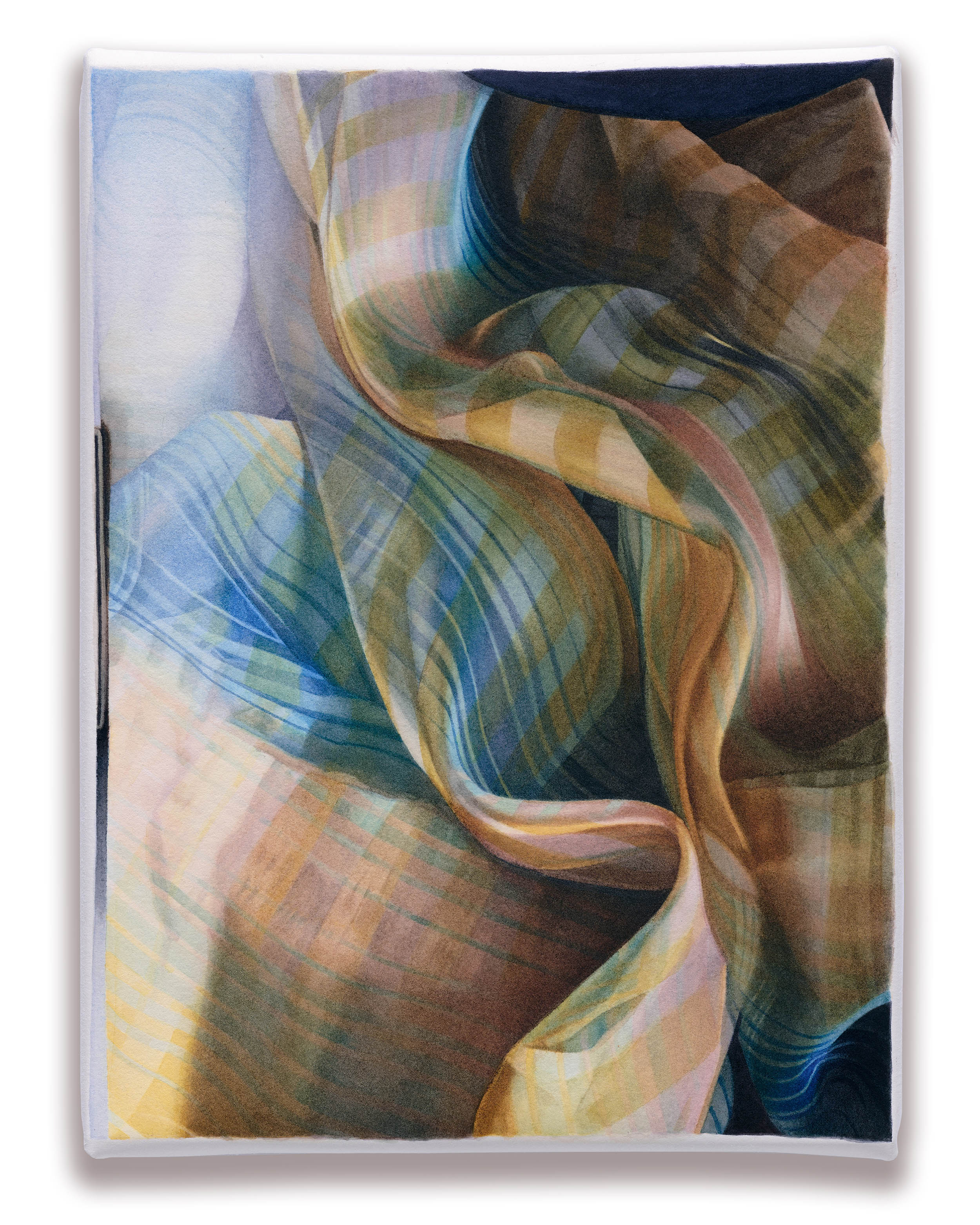
Fabric no.7, 2025, watercolor on paper on panel, 12 x 9 inches
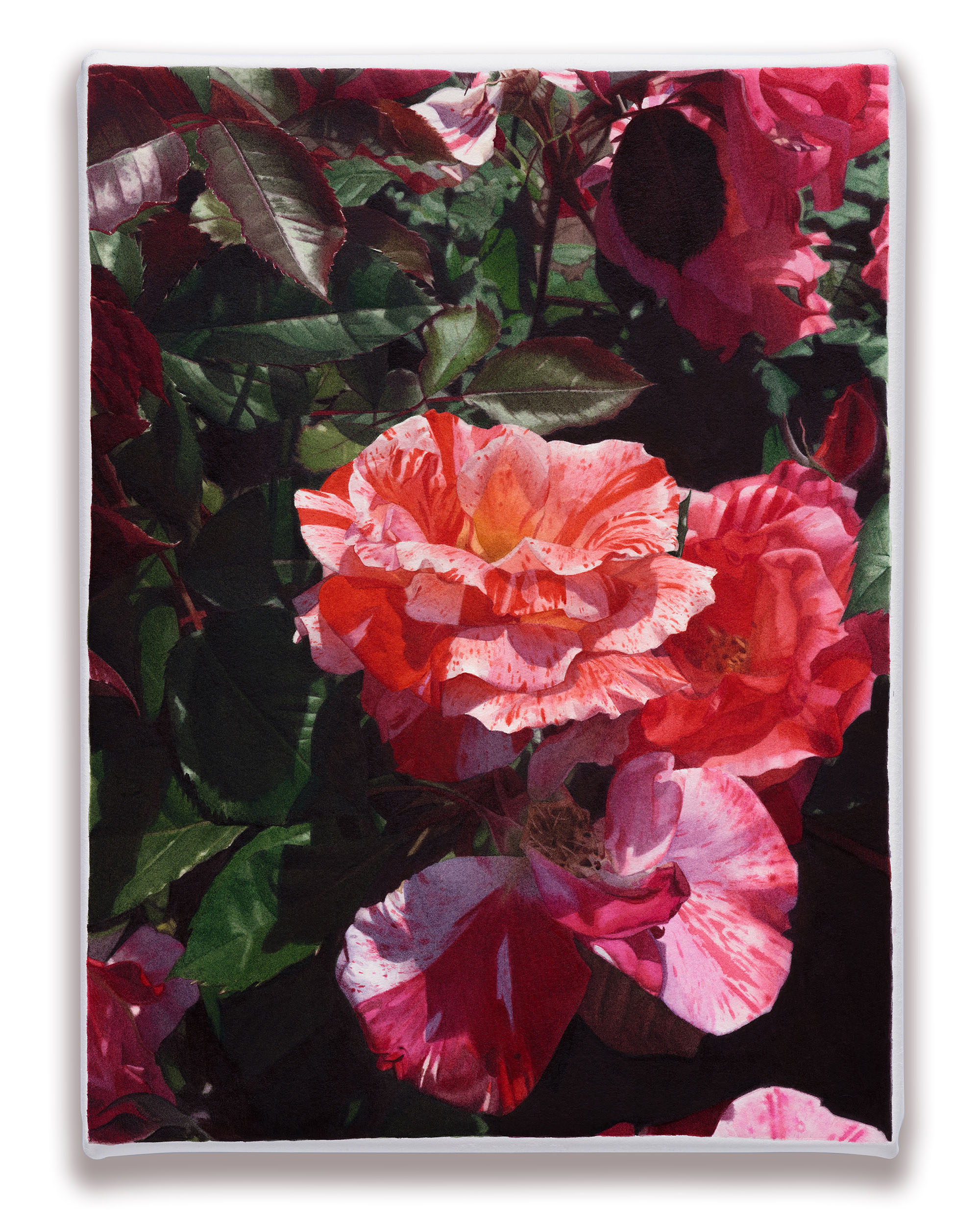
Flower no.28, 2025, watercolor on paper on panel, 12 x 9 inches
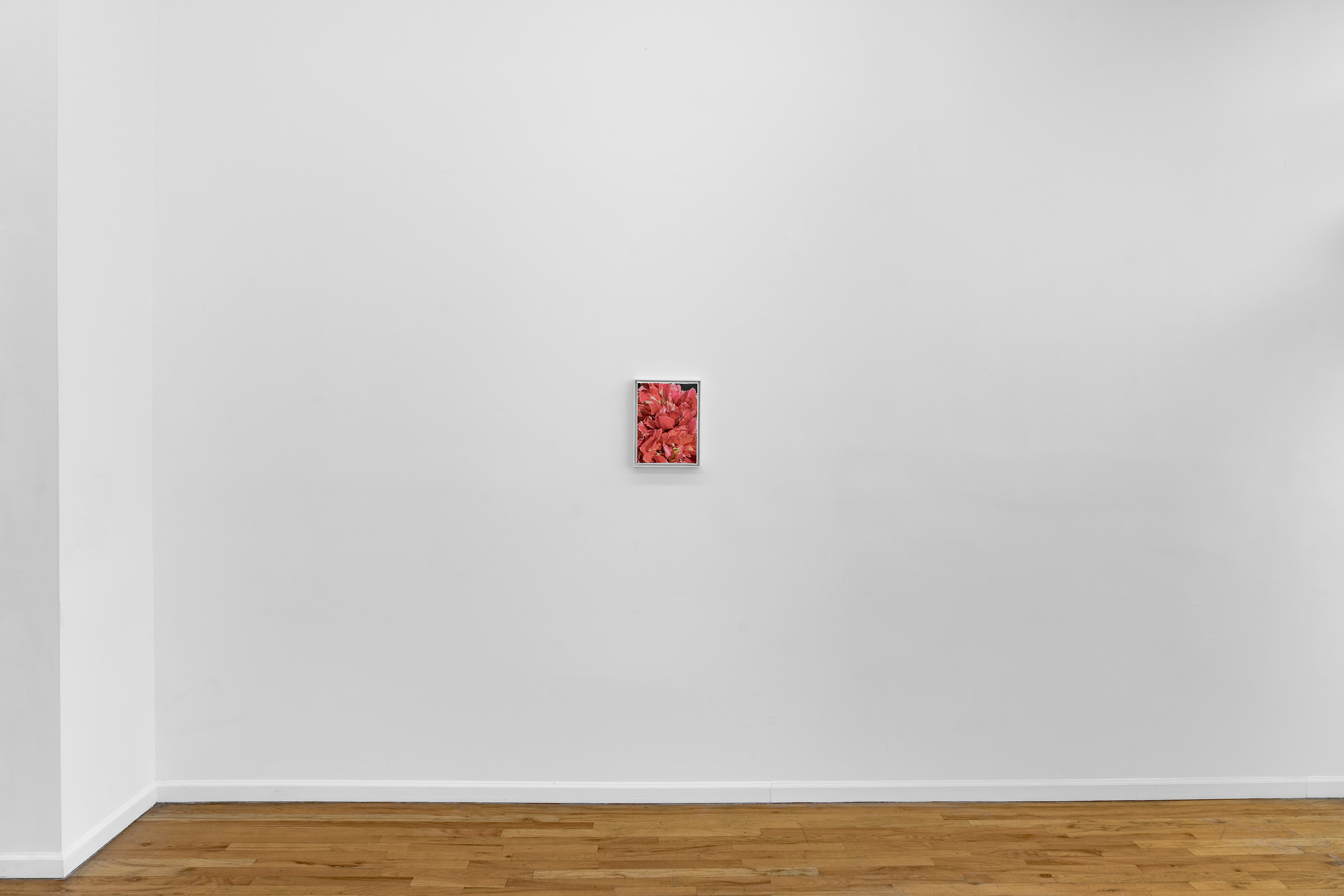
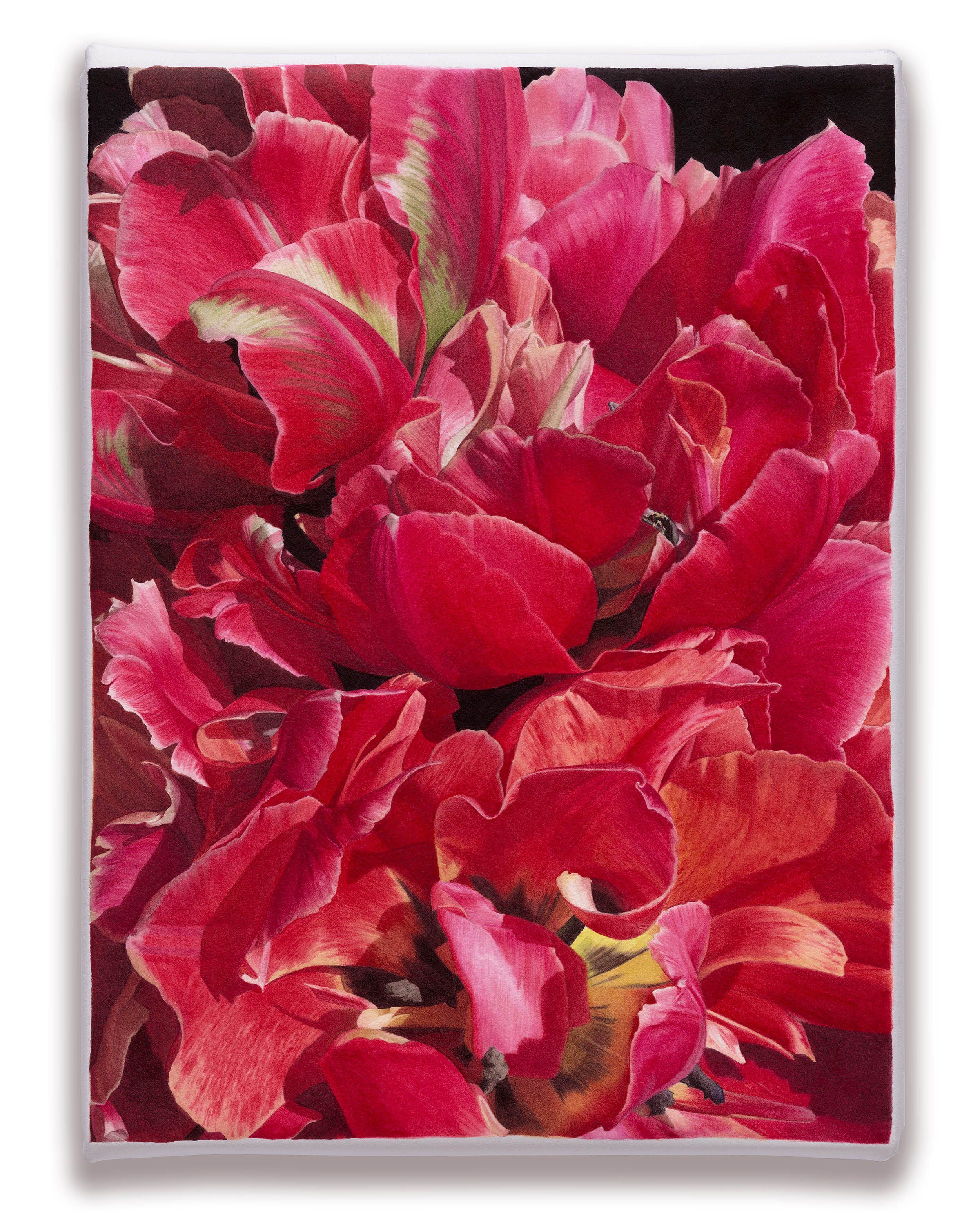
Flower no.27, 2025, watercolor on paper on panel, 12 x 9 inches
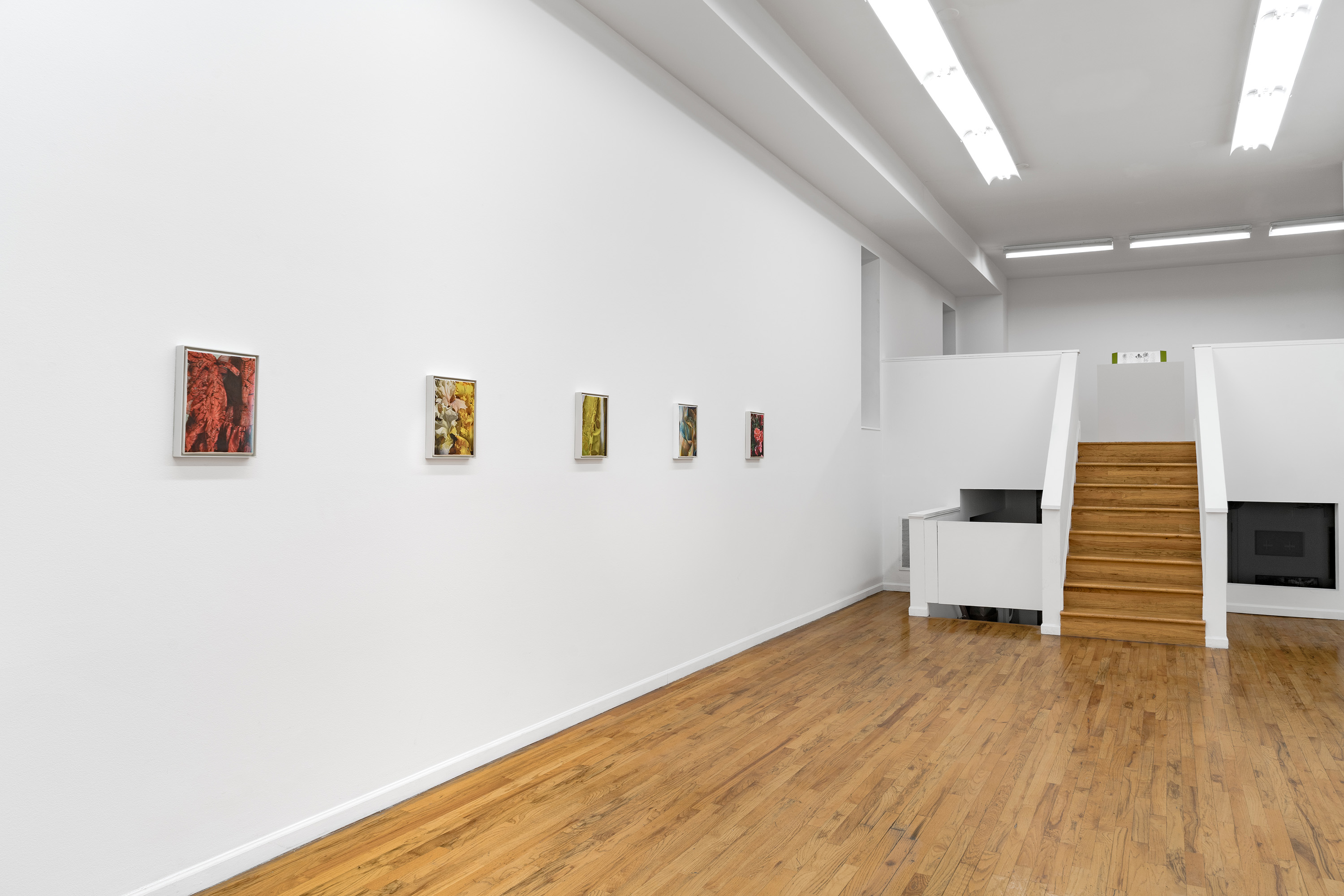
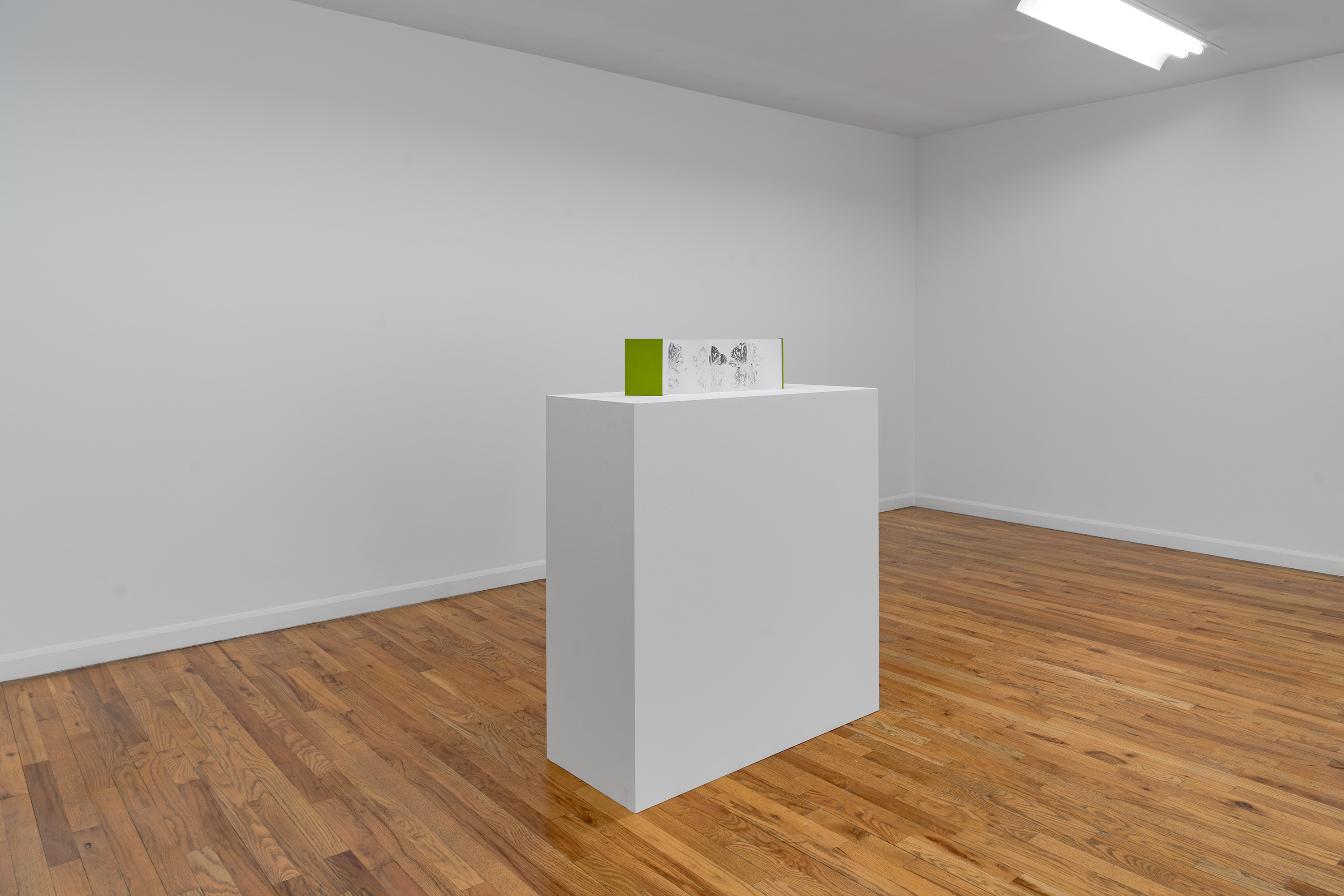
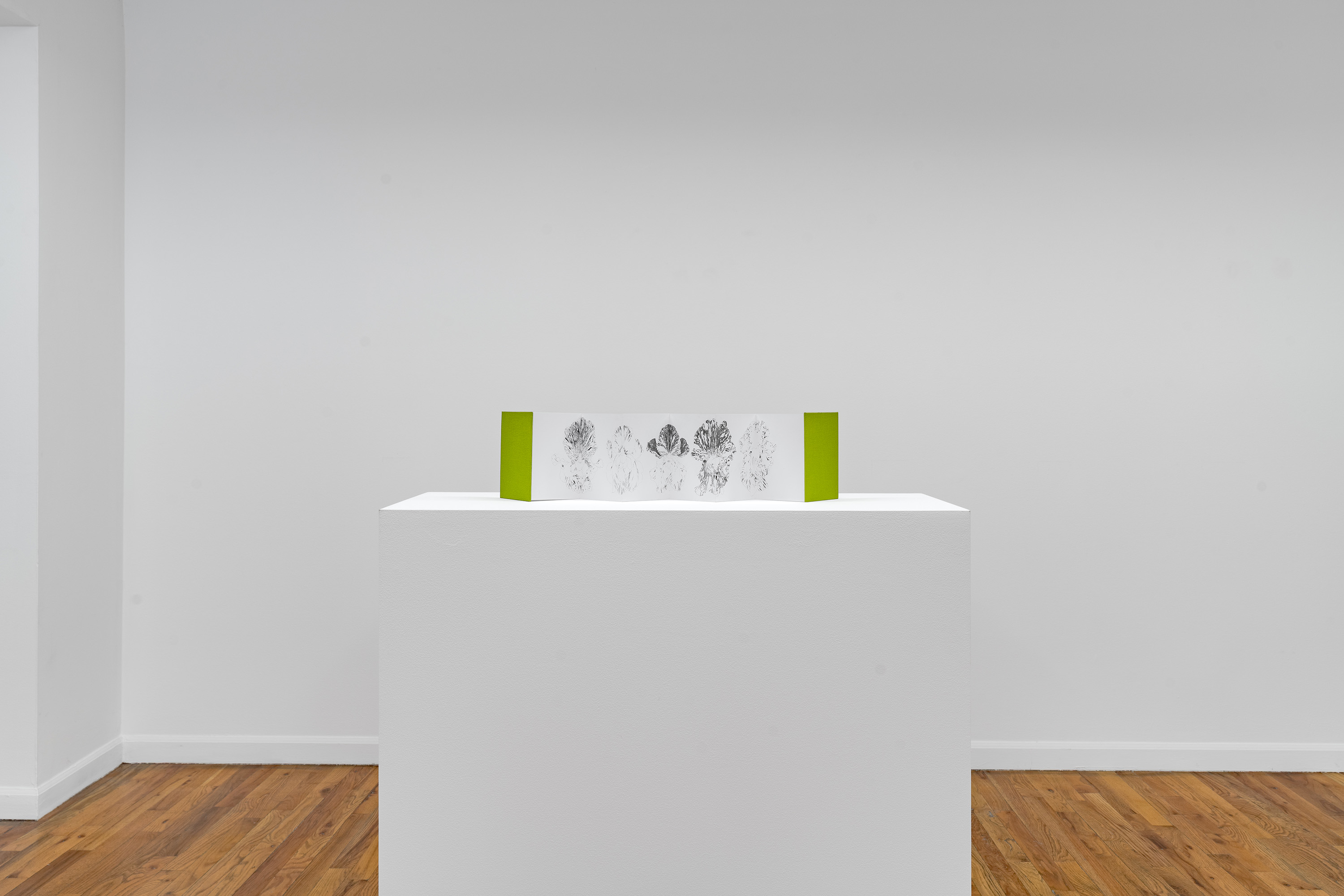
Patterns no.1, 2026, Graphite on paper, bound, 6 x 24 inches